

Views: 164 Author: Site Editor Publish Time: 2026-08-24 Origin: Site


High-stakes manufacturing faces a constant tug-of-war. You must balance upfront material expenses against the devastating risks of operational failure. When a component fails, you face product recalls and compromised safety. Settling for baseline materials becomes a dangerous gamble. We define addition-cured platinum silicone as a premium elastomer. It stands far above legacy peroxide-cured or tin-cured alternatives. Manufacturers rely on it for absolute purity and mechanical resilience.
This article provides a technical and commercial framework. You will learn how to evaluate if Platinum Silicone is the right specification for your production line. We will explore core performance metrics, strict compliance standards, and material return on investment. By understanding these dimensions, you can upgrade your tooling and part consistency with confidence. It bridges the gap between stringent regulatory requirements and high-volume manufacturing demands.
Purity & Compliance: Platinum silicone produces no toxic byproducts, making it the non-negotiable standard for FDA and USP Class VI applications.
Dimensional Stability: Offers near-zero shrinkage and exceptional tear strength, maximizing mold and part lifespan.
Total Cost of Ownership (TCO): While upfront costs are higher than tin or peroxide-cured silicones, ROI is realized through fewer part rejections, longer tooling life, and reduced liability.
Implementation Risk: Transitioning requires strict environmental controls, as platinum curing is highly susceptible to inhibition from sulfur, latex, and amines.
Many production lines suffer from hidden inefficiencies. Using inferior elastomers often leads to severe downstream problems. Parts might deform over time. Molds degrade rapidly after just a few casting cycles. These failures introduce massive operational burdens. Outgassing from cheaper materials can contaminate sensitive electronics, causing lenses to fog or circuit boards to short. Compliance breaches in medical or food-grade sectors trigger costly regulatory audits.
The platinum catalyst advantage changes this dynamic entirely. The curing process relies on an "addition cure" mechanism. The polymer chains cross-link directly. They do not generate any volatile byproducts during this chemical reaction. Because the material releases nothing into the air or the mold cavity, it maintains exact dimensional accuracy. It leaves absolutely no odor or residue. You get a perfect replication of your master model every time.
Defining success criteria helps justify the material upgrade. When you switch to a premium elastomer, a successful deployment looks like this:
Achieving flawless medical biocompatibility test results on the very first attempt.
Extending mold casting cycles by at least 30 percent compared to tin-cured alternatives.
Eliminating secondary post-cure baking processes entirely.
Reducing part rejection rates caused by surface tackiness or dimensional warping.
You achieve a streamlined production floor. We see fewer bottlenecks and highly predictable component quality.
Material purity remains the most critical factor for regulated industries. Platinum-cured formulations offer a highly non-toxic profile. The addition cure process ensures no residues migrate to the component surface. We contrast this sharply against peroxide-cured materials. Peroxide curing creates acidic byproducts and organic acids. These byproducts cause "blooming," a white powdery residue appearing on the part surface. Blooming ruins aesthetic finishes and introduces severe hygienic liabilities.
Furthermore, platinum formulations deliver odor-neutral and taste-neutral outcomes. This makes them indispensable for anything touching food or human skin. You never have to worry about chemical leaching altering a product's safety profile. Consumers expect pure, untainted interactions.
Industrial applications demand extreme physical resilience. You need materials capable of enduring harsh operational cycles. We measure this through tear strength, tensile strength, and elongation capabilities. Platinum formulations exhibit exceptionally high tear strength. When demolding a complex part featuring severe undercuts, the mold stretches significantly. High elongation prevents tearing during this forceful extraction.
They also maintain this mechanical integrity across drastic temperature shifts. Performance remains perfectly consistent from -40°C up to 200°C and often beyond. Cold environments do not make the material brittle. High heat does not melt or degrade the structural bonds. You can run continuous hot-casting cycles without damaging the tool.
Predictability drives manufacturing efficiency. You need parts to cure exactly to the specified dimensions. Shrinkage rates dictate whether a mold remains usable over time. Platinum Silicone boasts a remarkable shrinkage rate of less than 0.1 percent.
We compare this directly to tin-cured silicones. Tin-cured (condensation cure) materials release alcohol as they cure. This off-gassing causes the mold mass to shrink by 1 to 2 percent over a few months. A two percent shrinkage ruins tight engineering tolerances. Platinum materials hold their exact dimensions for decades. You gain archival stability and highly predictable manufacturing outcomes.
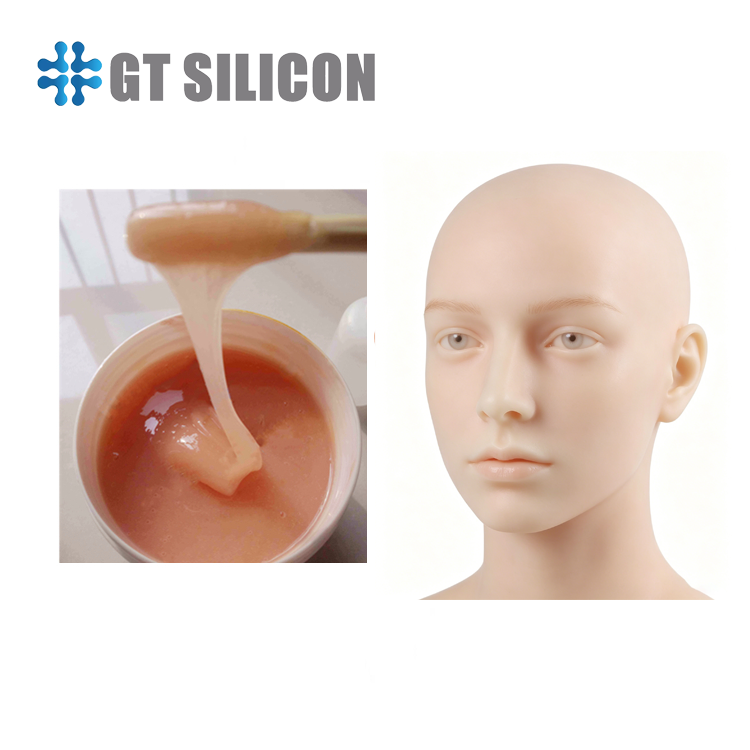
The medical device sector operates under the strictest material regulations globally. Engineers specify this material for both short-term and long-term implantables. It also serves as the gold standard for prosthetics, surgical tools, and fluid transfer tubing.
Regulatory compliance drives these material choices. Parts must pass ISO 10993 testing. This standard evaluates systemic toxicity and skin sensitization. They must also meet USP Class VI biocompatibility requirements. The chemical inertness of the platinum catalyst guarantees these compliance benchmarks. It prevents adverse biological reactions within the human body. Medical professionals trust these components implicitly.
Food processing lines require specialized elastomer seals and belts. You will find this material in conveyor systems, fluid valves, and commercial baking molds.
Compliance with FDA 21 CFR 177.2600 is mandatory for these applications. The regulation governs rubber articles intended for repeated food contact. Evaluators perform rigorous extraction testing using distilled water and fatty food simulants. The elastomer excels here because it resists degradation from animal fats and cooking oils. It also withstands harsh industrial cleaning chemicals. Routine sterilization does not break down the material surface.
Rapid prototyping relies heavily on dependable molding materials. Custom manufacturers use platinum formulations for high-fidelity resin casting. They also rely on it for high-volume liquid silicone rubber (LSR) injection molding.
Shelf-life and archival stability stand out as major advantages. Molds made from this material last indefinitely without turning brittle. When designers create expensive master models, they need a permanent tool. They need molds capable of producing hundreds of identical polyurethane or epoxy parts. This material delivers that exact longevity.
Selecting the right elastomer requires comparing practical trade-offs. You must weigh upfront material prices against long-term manufacturing efficiency. We built a comparative framework to guide your selection process.
Elastomer Comparison Matrix: Platinum vs. Alternatives
Evaluation Criteria | Platinum-Cured Silicone | Tin-Cured Silicone | Peroxide-Cured Silicone |
|---|---|---|---|
Cure Mechanism | Addition Cure | Condensation Cure | Free Radical Cure |
Shrinkage Rate | < 0.1% (Near Zero) | 1.0% - 2.0% | Moderate (requires post-cure) |
Byproducts/Off-gassing | None | Alcohol | Organic Acids |
Mold Library Life | Decades (Archival) | Short (Months to few years) | N/A (Mostly used for parts) |
Regulatory Compliance | FDA, USP Class VI, ISO 10993 | Not recommended for medical/food | Limited (taste/odor issues) |
Platinum vs. Tin-Cured:
You should focus on lifespan, library life, and shrinkage. Tin-cured materials work well for low-budget, non-archival art casting. However, tin molds degrade over time and lose precise dimensions. We recommend Platinum Silicone for any industrial prototyping or long-term production runs. The dimensional stability justifies the upgrade.
Platinum vs. Peroxide-Cured:
Here, the focus shifts to purity, off-gassing, and post-curing requirements. Peroxide-cured silicone serves perfectly for general-purpose automotive gaskets. In heavy industry, a slight chemical odor or minor outgassing rarely causes a failure. However, if your application demands high purity, platinum remains the only viable choice. It eliminates blooming completely.
Cost Justification:
Upfront costs for platinum formulations run higher per pound. Yet, manufacturers reach an operational breakeven point rapidly. You offset the initial premium through distinct manufacturing efficiencies. First, you eliminate the energy and time costs associated with post-cure baking. Second, you experience significantly lower scrap rates. Consistent cures and near-zero shrinkage mean fewer rejected parts. You maximize material return on investment effortlessly.
The primary vulnerability involves cure inhibition. This remains the most common failure mode during adoption. Inhibition occurs when the platinum catalyst encounters certain incompatible chemicals. The cross-linking reaction stops completely. The material remains sticky, gooey, or entirely uncured against the master model. It ruins the mold and often damages the master.
You must audit your manufacturing environment for known inhibitors. Even microscopic amounts can trigger a failure. Common culprits found in workstations include:
Sulfur-based modeling clays: Never use these to build retaining walls or mold keys.
Latex gloves and natural rubber products: The proteins and processing chemicals in latex halt the curing process instantly.
Tin-cured silicone cross-contamination: Sharing mixing buckets, stir sticks, or vacuum chambers guarantees inhibition.
Amine-based chemicals: Frequently found in specific 3D printing resins (SLA/DLP) and certain epoxies.
Adhesives and tapes: Specific masking tapes contain incompatible adhesive backings.
Adopting this premium material requires strict environmental hygiene. Follow these actionable steps to ensure a flawless transition:
Conduct small-scale patch tests: Always mix a tiny batch and apply it to a hidden area of your master model. Wait the full cure time to verify it hardens completely.
Seal problematic master models: If your 3D print causes inhibition, apply a high-quality acrylic spray. This creates a chemical barrier between the resin and the silicone.
Audit workstation cross-contamination: Dedicate specific mixing buckets, scales, and stir sticks solely for platinum materials. Color-code your tools.
Mandate nitrile gloves: Ban latex gloves from the molding department entirely. Swap them for powder-free nitrile alternatives.
Specifying a premium elastomer serves as a direct investment in part integrity. It guarantees regulatory safety and establishes long-term production stability. While the initial material cost appears higher, the operational advantages quickly validate the choice. You eliminate post-curing bottlenecks, reduce scrap rates, and extend the functional life of every mold.
To move forward successfully, start by requesting a detailed material specification sheet. Order a sample kit to conduct in-house patch tests on your current master models. Alternatively, consult with an application engineer. They can review your CAD models and environmental conditions. They will help you recommend the perfect durometer and curing profile for your specific project.
A: Yes, it is highly food safe. Platinum-cured formulations comply with FDA 21 CFR 177.2600. The material contains no plasticizers, BPAs, or phthalates. Because the addition cure process generates no toxic byproducts, it will not leach chemicals into food, water, or cooking oils.
A: The higher cost stems directly from the raw materials. The curing process relies on an actual platinum catalyst, a precious metal. Additionally, the base polymers undergo more rigorous refinement to ensure absolute chemical purity and superior mechanical properties.
A: No, you should avoid this entirely. Tin-cured silicone off-gasses alcohol and leaves microscopic residues. These residues will cause severe cure inhibition. The new material will remain sticky and uncured. You must use dedicated tools and molds to prevent cross-contamination.
A: Generally, it does not. Unlike peroxide-cured materials that require secondary baking to burn off acidic byproducts, platinum formulations cure cleanly at room temperature. This efficiency saves considerable manufacturing time and eliminates extra energy costs.


