

Views: 132 Author: Site Editor Publish Time: 2026-10-23 Origin: Site


Automotive engine bays expose materials to extreme thermal and chemical stress. Visual identification of these components is equally critical for assembly, maintenance, and aftermarket branding. Introducing color into high-performance elastomers is not a neutral process. Incorrect pigmentation degrades the tensile strength, flexibility, and thermal stability of the hose, leading to premature failure in forced induction or cooling systems.
To maintain structural integrity while achieving precise color requirements, engineers and procurement teams must evaluate the chemical composition, dispersion methods, and thermal thresholds of the pigments used. Selecting the correct silicone pigment for automotive hoses dictates the long-term reliability of the entire fluid routing system. This guide breaks down the technical evaluation of coloring agents for automotive silicone applications.
Pigment Format Dictates Consistency: Utilizing a silicone pigment masterbatch ensures superior dispersion and batch-to-batch consistency compared to raw powder pigments, reducing structural weak points in the hose.
Thermal Stability is Non-Negotiable: Pigments must be engineered specifically for heat-resistant silicone rubber to prevent color shifting, fading, or chemical breakdown at continuous operating temperatures exceeding 200°C (392°F).
Mechanical Trade-offs Exist: High pigment loading can negatively impact the physical properties of the silicone; precise custom silicone color matching requires balancing opacity with the base polymer's mechanical limits.
Supplier Vetting Reduces Risk: Partnering with a specialized silicone pigment manufacturer ensures compliance with automotive industry standards (e.g., IATF 16949) and prevents costly issues like pigment migration or bleeding.
On the assembly floor, color-coding prevents catastrophic routing errors. When operators install complex fluid systems, visual cues dictate the workflow. We use specific hues to map out the engine bay, ensuring mechanics and automated vision systems can instantly verify correct connections.
Hose Color | Typical Automotive Application | Primary Media Routed |
|---|---|---|
Blue | Cooling Systems / Radiator | Glycol / Water / OAT Coolants |
Red | Charge Air Coolers / Turbo | High-Temperature Compressed Air |
Black | OEM Stealth / Vacuum Lines | Air / Vacuum / Low-Pressure Fluids |
Yellow / Custom | Specialty Aftermarket / Oil Breathers | Oil Vapors / Custom Builds |
Traditional EPDM or NBR rubber lacks this visual versatility. Natural rubber compounds require heavy carbon black loading to survive UV exposure and ozone attack. This carbon black limits the material to dark, muted tones. Silicone elastomers possess a naturally translucent or milky-white base. This allows us to introduce vibrant, functional color-coding. You get highly visible lines without compromising the base polymer's environmental resistance.
Adding color is a chemical intervention. A pigmented hose must perform identically to an unpigmented control sample. It has to maintain extreme flexibility, high tear strength, and burst resistance under heavy vibration. Pigments are foreign particulates. They do not naturally bond with the siloxane polymer chains.
If you formulate the colorant poorly, it disrupts the cross-linking matrix during vulcanization. We see this manifest in several specific failure modes on the test bench:
Micro-voiding: Agglomerated pigment particles create dry pockets within the rubber, acting as stress concentrators.
Tear Propagation: When hydrostatic pressure spikes, these micro-voids initiate small tears that rapidly propagate through the hose wall.
Modulus Reduction: Excessive pigment loading physically displaces the reinforcing silica fillers, dropping the 100% modulus and making the hose overly soft.
Adhesion Failure: In reinforced hoses, migrating pigments can interfere with the adhesion between the silicone rubber and the aramid or polyester fabric plies.
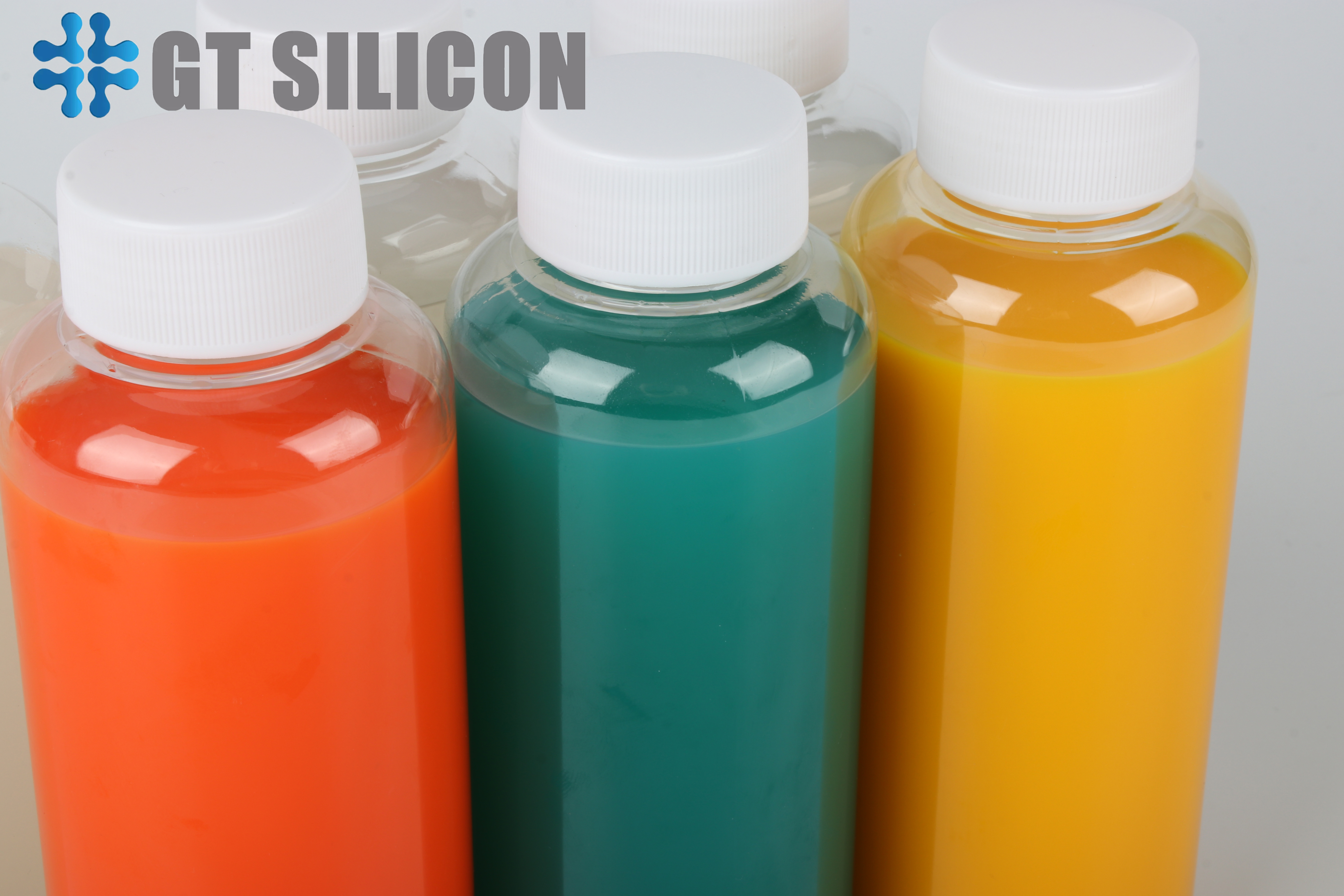
The silicone rubber manufacturing process dictates exactly how color integrates into the base material. High-Temperature Vulcanizing (HTV) silicone arrives as a high-viscosity, stiff gum. We mill the coloring agents directly into this raw gum before extrusion or calendering. This compounding stage requires immense mechanical shear.
Operators run the material through a two-roll mill. The hardened steel rollers spin at a friction ratio, typically 1:1.2 or 1:1.4. This speed differential creates a shearing action that folds the HTV silicone rubber pigment into the base matrix. We run chilled water through the cored rollers to keep the stock temperature below 40°C. If the friction generates too much heat, the compound will scorch, initiating premature vulcanization. Proper milling ensures the pigment particles disperse at a microscopic level.
The curing agent dictates your pigment options. Automotive hoses rely on either peroxide-cured or platinum-cured systems. Peroxide systems use free radical chemistry. They are robust but generate volatile byproducts that require a post-cure bake. Certain organic pigments will shift in color or degrade during this secondary baking phase.
Curing System | Pigment Compatibility | Primary Risks During Pigmentation |
|---|---|---|
Peroxide Cure | Broad compatibility with most inorganic pigments. | Color shifting during post-cure baking; degradation of sensitive organic dyes. |
Platinum Cure | Requires high-purity, specialized pigments. | Severe cure inhibition if exposed to trace amines, sulfur, or heavy metals. |
Platinum-cured systems use an addition reaction. They yield higher purity and superior mechanical properties but suffer from extreme sensitivity. Pigment-induced cure inhibition destroys platinum-catalyzed batches. If your colorant contains trace amounts of heavy metals, sulfur, nitrogen, or amines, it poisons the platinum catalyst. The rubber comes out of the mold sticky, uncured, and completely useless. We must verify chemical compatibility before mixing any new colorant into a platinum system.
Engine bays require complex fluid routing. We manufacture 45-degree bends, 90-degree elbows, and stepped reducers. Pigment dispersion directly impacts the structural integrity of these shapes. When you bend a hose, the outer radius stretches while the inner radius compresses.
Uneven pigmentation creates localized weak points. If a cluster of undispersed pigment lands on the outer radius of a 90-degree elbow, that specific zone loses its elongation capacity. When a mechanic stretches that hose over a beaded aluminum fitting, the stress point micro-tears. Consistent color dispersion ensures the mechanical load distributes evenly across the entire wall thickness, preventing localized failures under clamp torque.
Selecting the physical format of the colorant determines your mixing efficiency and final product quality. We evaluate three primary formats on the production floor.
Pigment Format | Dispersion Quality | Handling & Processing | Best Application |
|---|---|---|---|
Powder Pigments | Poor to Fair. High risk of agglomeration and streaking. | Messy. Creates airborne dust, risking cross-contamination in the facility. | Low-end industrial applications where mechanical limits are not critical. |
Liquid Colors | Excellent. Mixes easily into low-viscosity bases. | Requires specialized pumping equipment. Can separate over time. | Liquid Silicone Rubber (LSR) injection molding. |
Silicone Pigment Masterbatch | Superior. Pre-dispersed in a compatible silicone carrier gum. | Clean, easy to weigh, and mills rapidly into HTV bases. | Automotive hoses, high-pressure extrusion, and critical HTV molding. |
Powder pigments offer low upfront costs but carry severe risks. They agglomerate easily and create airborne dust that contaminates adjacent mixing lines. Liquid colors work well for Liquid Silicone Rubber (LSR) injection molding but fail to mix properly into stiff HTV extrusion gum.
A silicone pigment masterbatch is the standard for automotive applications. Suppliers pre-disperse the pigment into a compatible silicone carrier gum. This format allows operators to weigh the colorant cleanly and mill it rapidly into the HTV base, yielding high mechanical reliability without the mess of raw powders.
Turbochargers and exhaust manifolds generate intense radiant heat. You must engineer pigments specifically for heat-resistant silicone rubber. Standard colorants chalk, fade, or thermally degrade when exposed to continuous operating temperatures exceeding 200°C (392°F).
We evaluate thermal stability using strict oven-aging protocols based on SAE J20 and ASTM D2000 standards. Technicians place colored hose samples in forced-air ovens at 225°C for 72 to 168 hours. After aging, we measure the color shift using a spectrophotometer and pull tensile tests. A passing pigment shows zero surface chalking, minimal color drift, and maintains at least 75% of its original tensile strength.
Automotive hoses process aggressive media. Coolant lines carry Organic Acid Technology (OAT) mixtures. Charge air cooler hoses handle hot air saturated with blow-by oil mist. The pigment cannot react with these fluids.
Chemical incompatibility causes pigment leaching. If the colorant dissolves into the hot coolant, it alters the fluid chemistry and can foul mechanical water pump seals. We run immersion tests, soaking pigmented silicone plaques in heated coolant and oil for 500 hours. The pigment must remain locked within the cross-linked matrix, ensuring the hose retains its flexibility and burst strength over a 150,000-mile lifespan.
OEMs demand absolute aesthetic uniformity. A red turbo hose molded in January must perfectly match a red turbo hose molded in November. We track this using Delta E (ΔE) values, which measure the visual distance between two colors in the CIELAB color space. Automotive standards require a ΔE of less than 1.0.
Achieving this requires spectrophotometers and strict formulation control. Technicians measure the raw silicone base, which varies slightly in opacity depending on the silica filler used. They calculate the exact pigment load required to hit the target hue. Mill operators use precision scales to add the exact gram weight of masterbatch, eliminating human error from the compounding phase.
Engineers specify colors using standardized systems like RAL and Pantone. custom silicone color matching translates these paper codes into physical rubber formulations. This is difficult because the base silicone is not perfectly transparent. It has a refractive index and a milky opacity.
Formulators adjust the ratio of organic and inorganic pigments to achieve the correct hue, saturation, and lightness. They must account for the base material's optical properties to ensure the final cured hose matches the specified Pantone chip under standard D65 daylight viewing conditions.
Custom formulations require extensive lab time, trial milling, and specialized raw materials. Procurement teams must weigh the aesthetic value of a unique metallic flake blue against the formulation costs and minimum order quantities.
A strict trade-off exists between opacity and mechanical performance. Achieving a deep, highly opaque color requires a higher pigment load. Adding too much pigment displaces the reinforcing silica, reducing the maximum tear strength and elongation of the rubber. We balance the desire for rich color with the mechanical limits of the base polymer to ensure the hose passes dynamic burst pressure testing.
Pigment migration, or blooming, occurs when the coloring agent separates from the polymer matrix and travels to the surface. It leaves a powdery residue that transfers to mechanics' hands or surrounding engine components. This happens when formulators use cheap, low-molecular-weight dyes instead of stable pigments.
We mitigate this by utilizing fully compatible, high-molecular-weight pigments. These larger molecules physically lock into the cross-linked silicone structure during vulcanization. We also ensure the curing oven profiles are long enough to achieve 100% cross-linking, preventing unreacted polymer chains from carrying pigment to the surface.
Over-pigmentation creates severe stress concentrations. When operators exceed the recommended pigment load to force a darker color, they ruin the physical properties of the rubber. This leads to catastrophic burst failures under boost pressure, especially at elbows and reducers where mechanical stress peaks.
Operators must strictly adhere to manufacturer-recommended Let-Down Ratios (LDR). The LDR dictates the percentage of pigment added to the base gum. For automotive hoses, this ratio sits between 0.5% and 2.0%. Staying within this window guarantees vibrant color without compromising the elastomer's tensile strength.
Sourcing colorants from unverified suppliers introduces massive liability. Partnering with a specialized silicone pigment manufacturer ensures the materials meet strict automotive safety and performance standards. Use this checklist when auditing potential suppliers:
Verify ISO 9001 and IATF 16949 certifications for automotive-grade quality management.
Demand comprehensive Technical Data Sheets (TDS) detailing thermal limits, specific gravity, and recommended LDR.
Review Material Safety Data Sheets (MSDS) to confirm the absence of heavy metals, sulfur, or restricted substances.
Assess their internal lab capabilities, specifically their equipment for spectrophotometry, rheometer testing, and heat aging.
Request lot-to-lot consistency reports showing historical Delta E values for their masterbatch production.
Audit your current pigment inventory and eliminate raw powder colorants to reduce airborne contamination and agglomeration risks on the mixing floor.
Require your suppliers to provide spectrophotometer reports and Delta E values for every masterbatch lot before accepting delivery into your facility.
Conduct burst pressure and 72-hour heat aging tests on all newly pigmented hose prototypes to verify that the colorant does not inhibit the vulcanization process.
Standardize your Let-Down Ratios (LDR) between 0.5% and 2.0% across all extrusion and molding lines to prevent mechanical degradation from over-pigmentation.
A: Silicone provides superior heat resistance, longevity, and flexibility for fluid routing. Unlike natural rubber, which relies on carbon black for UV protection and offers limited color options, silicone accepts custom pigmentation readily. This enables precise system mapping and high-performance aesthetics without sacrificing durability in harsh engine environments.
A: Silicone pigment masterbatch is the superior format. It pre-disperses the color in a compatible silicone carrier, ensuring excellent mixing in HTV silicone. This prevents agglomeration and weak spots in the hose structure, which is particularly critical when molding complex shapes like 90-degree bends and reducers.
A: Standard pigments can degrade, chalk, or fade under high engine heat. To maintain the properties of heat-resistant silicone rubber, manufacturers must use specialized HTV silicone rubber pigments engineered to withstand continuous operating temperatures exceeding 200°C (392°F) without breaking down.
A: Manufacturers utilize spectrophotometry to precisely match standardized RAL or Pantone colors. Technicians calculate the exact pigment formulation required to hit the target hue while accounting for the natural opacity of the base silicone. They carefully balance pigment load to respect the mechanical limits of the rubber.
A: Fading usually results from poor UV resistance or inadequate thermal stability of the chosen pigment. It can also occur due to chemical attack from harsh engine fluids, OAT coolants, or fuel vapors interacting with incompatible organic dyes used in low-quality colorants.
A: The standard Let-Down Ratio (LDR) for the silicone rubber manufacturing process usually ranges from 0.5% to 2.0%. This exact percentage depends on the desired opacity, the specific color formulation, and the wall thickness of the extruded or molded hose.
A: Yes. Poorly dispersed powder pigments can create microscopic agglomerations within the polymer matrix. These clumps act as stress concentrators, reducing the material's tear strength. Under high boost or hydrostatic pressure, these weak points can lead to catastrophic burst failures.


