

Views: 162 Author: Site Editor Publish Time: 2026-10-12 Origin: Site


Engineering and fabrication teams constantly fight bottlenecks when sourcing mold-making materials. You need rapid curing without losing dimensional stability or fine detail. Traditional liquid molding systems slow down the production floor. They demand degassing equipment, complex containment boxes, and long cure times that kill project momentum and inflate labor hours. Two-part silicone putty solves these workflow hurdles directly. By mixing two pliable components by hand, you capture precise surface details in minutes. Technical buyers, industrial designers, and engineers use this high-viscosity material for rapid prototyping, non-destructive testing, and medical device fabrication. We will break down the chemical properties of these putties, their primary industrial uses, and how you select the exact formulation required for your operational environment.
Material Versatility: Silicone putty provides an equipment-free, rapid-cure solution for capturing high-fidelity impressions across diverse substrates.
Application Specificity: Formulation dictates function; selecting between platinum-cure and tin-cure systems determines the material's suitability for food-safe, medical, or industrial environments.
Risk Mitigation: The primary failure point in application is cure inhibition (specifically with platinum systems) and improper mixing; proper substrate evaluation and handling protocols are critical before deployment.
Vendor Selection: Scaling from prototype to production requires partnering with a custom silicone putty manufacturer capable of customizing Shore hardness, working times, packaging, and compliance certifications.
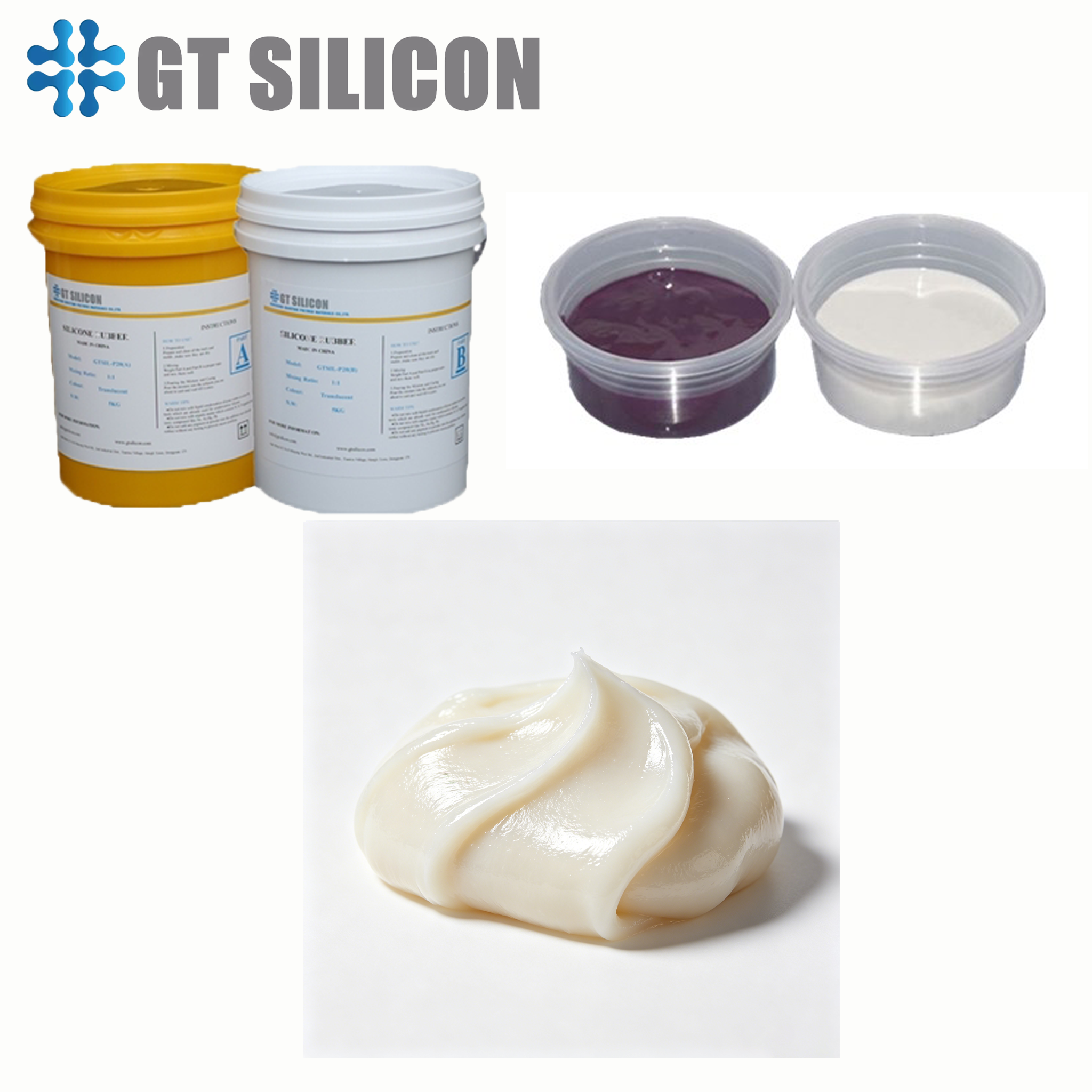
Room-temperature vulcanizing (RTV) silicone systems rely on a two-part chemical framework: a base (Part A) and a catalyst (Part B). Liquid silicones force you to use precise digital scales and mechanical mixers. Putty systems bypass this entirely. They use a straightforward 1:1 mix ratio by volume or weight. The high-viscosity material feels and acts like modeling clay before it cures.
Operators handle the mixing mechanics manually. You take equal amounts of Part A and Part B and knead them together. Manufacturers dye the two parts in highly contrasting colors, like white and deep blue or yellow and bright purple. This contrast acts as a built-in quality control indicator. As you knead the material, the colors blend. You only stop mixing when the putty reaches a solid, uniform color with zero streaks. Any remaining marbling means unmixed catalyst. That leaves uncured, sticky spots on your final mold, ruining the impression.
Choosing the right chemical base dictates project success. The industry splits these materials into two categories based on their curing mechanism.
Platinum-cure (addition cure) systems use a platinum complex to catalyze the cross-linking process. They produce no chemical byproducts during curing. This means you get virtually zero shrinkage over time. Platinum systems deliver superior longevity, exceptional dimensional stability, and inherent biocompatibility. You use them for skin contact and medical applications. However, they suffer from severe cure inhibition when exposed to sulfur, latex, or specific amines.
Tin-cure (condensation cure) systems use a tin salt catalyst. They release a small amount of alcohol byproduct as they cure. Because this alcohol evaporates, tin-cure molds experience slight dimensional shrinkage over time. They also have a shorter library life before becoming brittle. Their main advantage is raw durability against contaminants. Tin-cure systems successfully cure over heavily contaminated surfaces, including sulfur-based clays and latex, where platinum systems fail completely.
Engineers must look past basic curing times on technical data sheets. Several performance metrics dictate how the material behaves on the shop floor.
Shore A Hardness: Measures the flexibility of the cured rubber. A Shore 10A putty feels extremely soft and pliable. You use it for delicate objects with deep undercuts. A Shore 40A putty cures to a firm, rigid state. It provides excellent structural support for flat or geometric industrial parts.
Pot Life (Working Time): Defines the exact window you have to mix the material and apply it to the substrate before cross-linking starts and the putty stiffens.
Demold Time: The total time required before you can safely peel the cured impression away from the master object without tearing or distorting it.
Tear Strength: Measured in kN/m, this indicates how much force the cured mold withstands before ripping. You need high tear strength when pulling molds off complex, jagged geometries.
Thermal Resistance: Marks the maximum temperature the cured mold endures without degrading. You check this metric closely when casting exothermic resins or low-melt metals.
Speed and accuracy drive manufacturing environments. silicone putty for industrial prototyping acts as a primary tool for rapid tooling and fixture creation. When you need to reverse-engineer a legacy part or build a custom holding jig for a CNC machine, you press the putty directly against the component. It captures exact dimensional data and thread details without the liquid runoff you get from pourable silicones.
Quality assurance technicians use it heavily in non-destructive testing (NDT). You often need to inspect micro-fractures, weld seams, or surface finishes on massive machinery that you cannot move to a metrology lab. You apply a fast-curing putty to the surface to create a perfect negative replica of the texture. You then transport that cured replica to a laboratory and examine it under a microscope.
Medical and special effects applications require materials strictly safe for human contact. silicone putty for prosthetics uses high-grade platinum catalysts to meet stringent biocompatibility standards. These formulations often achieve USP Class VI certification, ensuring the material remains non-toxic, hypoallergenic, and safe for direct skin application.
Practitioners rely on these specialized putties for custom socket fitting. You capture the exact geometry of a residual limb to guarantee a comfortable, frictionless prosthetic fit. Clinics also use it in scar management therapies and to create highly accurate anatomical impressions for custom orthotic inserts. The rapid cure time minimizes the time a patient must remain still while the impression sets.
Fabricators reproducing parts in polyurethane, epoxy, or polyester use silicone mold putty to streamline the entire workflow. Traditional mold making forces you to build a sealed containment box, secure the master part, mix liquid silicone, degas it in a vacuum chamber, pour it carefully to avoid bubbles, and wait up to 24 hours for a cure.
When you switch to silicone putty for resin casting, you bypass that entire process. You knead the material and press it directly over the master object to form a blanket mold. Within 20 to 30 minutes, the mold cures and is ready for casting. The inherent non-stick properties of silicone eliminate the need for chemical release agents in most applications. This self-releasing nature protects the surface finish of your cast parts, extends mold longevity, and drastically cuts overall cycle times.
Here is the standard field workflow for resin casting with putty:
Clean the master object thoroughly to remove dust, oils, or potential cure inhibitors.
Measure equal parts of A and B by volume.
Knead vigorously for 60 seconds until the color is completely uniform.
Press the putty firmly into the deepest details of the master object first to prevent trapped air.
Build up the thickness evenly across the rest of the object to ensure structural stability.
Allow the material to cure fully based on the technical data sheet before demolding.
The unique physical properties of this material support highly specialized silicone rubber applications across various sectors.
High-Temperature Masking: Automotive and HVAC manufacturers use rigid putty formulations to plug holes or mask off complex geometries before running parts through high-heat powder coating ovens.
Architectural Restoration: Conservators press putty onto historical moldings, statues, or masonry. You capture intricate textures for restoration work without damaging the fragile original surfaces.
Forensic Investigation: Crime scene investigators utilize fast-setting putties to capture highly detailed impressions of tool marks on doors or windows. This preserves physical evidence for courtroom presentation.
Culinary Arts: Pastry chefs and chocolatiers use FDA-compliant formulations to create custom, food-safe molds for fondant, ice, and chocolate casting.
Technical buyers must weigh silicone against competing impression materials before issuing purchase orders. The table below outlines how these materials perform in a production environment.
Material Type | Dimensional Stability | Equipment Required | Primary Drawback | Ideal Use Case |
|---|---|---|---|---|
Alginate | Very Low (shrinks as water evaporates) | Mixing bowls, water source | Degrades rapidly; single-use only | Temporary lifecasting, immediate plaster pours |
Polyurethane Rubber | High | Scales, mixing tools, release agents | Moisture sensitive; adheres to everything | Casting concrete or heavy abrasive materials |
Liquid Silicone | Very High | Vacuum chamber, mold boxes, scales | Long cure times; requires containment | Complex molds with deep, microscopic undercuts |
Silicone Putty | High to Very High | None (Hand mixed) | Cannot flow into microscopic crevices automatically | Rapid impressions, shallow molds, field repairs |
Defining success before purchasing material prevents costly production errors. You must evaluate the required detail resolution of your project. Putty captures excellent detail, but it does not flow like water. You must physically press it into crevices. If your part features microscopic, hair-thin undercuts, you need a liquid system.
You must also define acceptable shrinkage tolerances. If you manufacture aerospace components where a fraction of a millimeter matters, only a premium platinum-cure system works. Finally, determine your target cycle times. You select a formulation with the appropriate pot life and demold speed to match your assembly line pace.
Deploying new materials introduces specific risks. Operators mitigate these through proper training and substrate evaluation.
Cure inhibition remains the most common failure point for platinum systems. Contaminants poison the platinum catalyst, leaving the putty as a sticky, gooey mess against the surface. Common inhibitors include:
Latex gloves and rubber bands.
Sulfur-based modeling clays.
Specific UV-curing 3D printing resins.
Amine compounds found in certain epoxies.
Freshly applied cyanoacrylate (super glue).
To mitigate this, operators must wear nitrile gloves and perform a small patch test. If inhibition occurs, you apply a barrier coating, such as a clear acrylic spray, over the master object.
Improper pressing techniques trap air between the putty and the master object. This creates voids or bubbles on the mold surface. Operators apply the putty starting from the deepest details and push outward to expel air. Sticky spots on the back of the mold almost always result from incomplete kneading.
Silicone putty degrades over time, especially once opened. Cross-contamination between the Part A and Part B lids causes the material to cure inside the containers. You store materials in a climate-controlled environment away from extreme heat or UV light to protect your investment.
On a strict per-gram basis, silicone putty carries a higher upfront material cost than standard liquid silicone. Procurement teams must evaluate the total value proposition. Putty eliminates the need to purchase mold box materials, hot glue, mixing cups, and stirring sticks. It bypasses the need for expensive vacuum degassing chambers and the electricity to run them. Most importantly, it cuts labor time from hours to minutes. When you factor in the massive reduction in active labor and equipment overhead, putty frequently presents a lower overall cost for rapid molding applications.
Buying off-the-shelf retail kits works for one-off projects or initial prototyping. Integrating this material into a continuous manufacturing line requires a different approach. Transitioning to industrial supply demands strict quality control. Partnering with a reliable custom silicone putty manufacturer ensures lot-to-lot consistency. When your assembly line relies on a precise 5-minute working time, a bad batch that cures in 2 minutes causes severe production bottlenecks. Industrial manufacturers utilize rheology testing and retain batch samples to guarantee every shipment performs identically.
Working directly with a manufacturer allows you to alter the chemical formulation to match your exact workflow. Manufacturers adjust the color-coding of Part A and Part B to align with your internal safety or visual management systems. They modify the thixotropic properties, making the putty stiffer for vertical applications or slightly softer for delicate parts.
They dial in the exact working and demold times. If your operators need 15 minutes to apply the material to a large surface, the manufacturer slows down the catalyst reaction to accommodate that specific assembly line speed.
Manufacturing environments have diverse material handling requirements. A custom supplier provides flexible packaging options that retail brands ignore. If your facility uses automated dispensing equipment, you receive the material in large bulk pails or drums. If you manage a team of field technicians who perform on-site NDT inspections, the manufacturer supplies the putty in pre-measured, single-use individual packets. This prevents material waste, eliminates the risk of cross-contamination in the field, and simplifies inventory tracking.
Regulatory compliance is non-negotiable depending on your end-use application. Industrial manufacturers maintain rigorous documentation for their formulations. If you produce culinary molds, you request documentation proving FDA compliance for food contact. For medical devices or prosthetics, you require USP Class VI or ISO 10993 certifications to verify biocompatibility. A qualified manufacturing partner provides comprehensive Technical Data Sheets (TDS), Safety Data Sheets (SDS), and batch-specific certificates of analysis to satisfy your internal quality management systems.
Silicone putty serves as a highly specialized, high-efficiency tool designed for rapid, equipment-free impressions. It eliminates the need for vacuum chambers and containment boxes, drastically reducing labor overhead and accelerating project timelines. You rely on tin-cure systems for rough, contaminant-heavy environments where robustness matters. You specify platinum-cure systems for precision engineering, archival restoration, and biological applications where zero shrinkage and safety remain paramount.
Take the following steps to integrate this material into your production line:
Audit your current mold-making processes to identify bottlenecks caused by liquid curing times or complex mold box construction.
Request comprehensive Technical Data Sheets (TDS) from potential suppliers to verify Shore hardness and thermal resistance metrics.
Order small sample kits to conduct physical patch tests on your specific substrates to ensure no cure inhibition occurs.
Establish strict internal handling protocols, including mandatory nitrile glove usage and visual color-check standards for manual mixing.
A: The primary difference is viscosity and workflow. Putty is a thick, clay-like material mixed by hand, requiring no mold boxes or vacuum degassing equipment. It cures rapidly but must be physically pressed into details. Liquid silicone flows naturally into microscopic undercuts but requires containment, degassing chambers, and significantly longer cure times.
A: Measure equal amounts of Part A and Part B by volume or weight. Knead them together vigorously by hand. Continue folding and pressing the material until the two contrasting colors merge into a single, solid color. You must mix until absolutely no streaks remain to prevent uncured, sticky spots.
A: Cure times vary based on the specific formulation and ambient temperature. Rapid-setting putties cure in as little as 3 to 5 minutes, making them ideal for quick impressions. Standard formulations typically require 20 to 30 minutes. Warmer environments accelerate the cure, while colder temperatures slow it down.
A: Yes, but only specific formulations. You must use a platinum-cure silicone putty that explicitly carries FDA-compliant certifications for food contact. Tin-cure systems are never food-safe. Always verify the manufacturer's documentation before using the material for chocolate, fondant, or ice molds.
A: This usually results from cure inhibition or improper mixing. Platinum-cure systems fail to cure if they contact sulfur, latex gloves, certain 3D printing resins, or amine compounds. If the surface is clean, the failure likely stems from an inaccurate 1:1 mix ratio or incomplete kneading.
A: The lifespan depends on the chemical base and the casting material. Platinum-cure molds have a library life of decades without shrinking. Tin-cure molds become brittle after a few years. Casting aggressive polyurethane or epoxy resins degrades the mold surface quickly, whereas casting benign materials like wax allows for hundreds of uses.
A: Yes. Manufacturers customize the Shore A hardness to suit specific applications. They formulate highly pliable putties around Shore 10A for delicate objects with deep undercuts. They also create rigid formulations up to Shore 40A for industrial parts that require strong structural support during the casting process.


